
15 expert tips for exporting powercords
As suppliers of international plugs and power cables, our products end up powering equipment all over the globe. We export our connectors and cables internationally, and have so far supplied products to 66 different countries and territories, on all continents except Antarctica – see map.
We also support our customers who may themselves export to many more places, anywhere in the world. We have written this short 3-minute reading time article of our 15 tips for exporting powercords.
Financial implications when exporting powercords
Any international transaction will have some financial aspect, be it exchange rates between currencies or using a banking system in a different jurisdictions.
1. Currency and foreign exchange
Customers may wish to pay in local currency, the supplier’s currency e.g. GBP pound sterling in our case, or stable third currency such as the US dollar (USD), Euro (EUR), or Japanese Yen (JPY). Actual values will change due to fluctuating exchange rates and banking charges: this should ideally be taken into account in advance to maintain profitability. A specialist foreign exchange broker (Forex or FX) can usually provide considerable savings in this event, as can forward-deals and consolidation; the international FX market is only loosely regulated, but we can provide recommendations.
2. Letters of Credit
The reliability and reputation of a foreign customer is harder to check than that of a domestic one. With a letter of credit, the customer’s bank underwrites the invoice amount and guarantees or even makes the payment, either on receipt of the physical powercords or of shipping documentation. The LoC may also be known as an LoU, Letter of Understanding. For an exporter, an international bank is a much lower credit risk than an unknown customer a long way away and in a different jurisdiction. The bank usually requires collateral from the customer, and charge a fee, so the customer may choose to take the risk themselves and pay for the goods in advance.
3. Type of economy
The type of economy in the destination country may affect the process also. A completely free market should be easier to operate in, but will have unrestricted competition. A more centrally planned economy will be the opposite.
A green economy will favour or discriminate against different products or services e.g. powercords depending on real or perceived environmental credentials. Sub-sections may also be treated differently, e.g. primary (raw materials), secondary (manufacturing), or tertiary (services); also between the public/state, private, and voluntary sectors.

Differences when exporting powercords
A major benefit of exporting is accessing a larger market, but it also means more competetion and more issues to consider.

4. Language
English may be a lingua franca for most of the world, but some countries understandably prefer to communicate using their own language. With several international native speakers in our team we offer multilingual support in 5 languages with basic competency in 5+ more.
5. Culture
Business culture and general expectations vary by country, including forms of address, payment terms, and attitudes to punctuality, truthfulness, contradiction, blame, and politics. An understanding of this can help smooth international transactions by avoiding culture-clash before it becomes an issue.
6. Local variations
From experience, we can often provide background information on local legislation and restrictions, some of which aren’t always immediately obvious. Wooden packaging including pallets, depending on country, may have to be treated for pest and disease control.
Another example is sub-national environmental legislation, e.g. in the USA: Proposition 65 in California, or 38 M.R.S. §1614 in Maine. Also, products supplied to the US Federal Government must only use parts sourced from TAA (Trade Agreements Act) authorised countries.
Another is that ITAR (International Traffic in Arms) restrictions usually limit re-export of products.
7. Trade restrictions
These are imposed by various countries for security reasons on: products (weapons, hazardous goods, advanced technology), transactions (money-laundering), markets (defence, aviation, medical, nuclear), nations (military enemies, trade competitors), regions (an area at war)
These can be an outright ban or varying levels of administrative notifications and permissions/licenses. There may be a complex matrix of regulations stemming from: the country of origin (where the goods were manufactured), the exporting country (in our case the UK), any transit countries (if the product, country, or use is embargoed), and the importing country.
Customs considerations when exporting powercords
Anything imported into a country must pass through customs to check for legality and applicable taxes so consider these are some of the considerations.
8. Import tax
Import tax is usually charged at the same rate as tax on domestic sales, which it replaces, sometimes known as Sales Tax, Value Added Tax (VAT, TVA, IVA, BTW), or Goods and Services Tax (GST). As this tax is charged on imports, it means that exports are usually exempt from VAT/GST, to prevent being charged more than once.
Like sales tax, import tax is normally reclaimable by business importers. We require a local VAT or GST tax number for all exports, and for some countries also private individuals (usually their personal tax identification number, TIN or NIT). For the EU we require an EORI (Economic Operators Registration and Identification) number in addition to VAT number.
9. Trade tariffs
Import tariffs or customs duties are charges levied by the importing country on goods e.g. powercords; less common export tariffs also exist. These are usually protectionist, to penalise imported products by making them more expensive than domestic ones, therefore supporting home industry; they are also a source of revenue for that government. Tariffs can either be a fixed cost per item, or a percentage, and are calculated based on the tariff code of the goods.
10. Customs bonding
Importing mains cables, they can be imported into a customs bonded warehouse. In this case, they can be stored duty-free, and only officially enter the country and attract duty when they leave the warehouse. There are admin charges for this, so it is only worth doing for larger consignments. A larger version of this is a free port or economic free zone, where it may be the whole or a subdivision of an airport, harbour, city or island. This is useful if the goods are not staying permanently in the country, and avoids importing then re-exporting.

11. Incoterms
We normally send our mains cables and powercords under one of two shipping terms:
- EXW, ex works, where the customer collects the goods from our warehouse with their courier or freight forwarder
- DAP, delivered at place, where we deliver to a named place, normally the client’s address or where their product is being installed.
In both cases the customer is responsible for the import process and the payment of duties and import taxes on powercords. We occasionally offer shipping on other terms, e.g. to a named port or vessel in the case of seafreight. Shipment can be by road, sea, or air, or a combination. Generally slower is cheaper, especially the larger or heavier a consignment becomes. For most of our shipments, it’s usually airfreight to nearest hub then the final section by road with a local carrier. As a regular exporter we can negotiate competitive freight rates and optimise shipment times.
12. HS Codes
The Harmonised System categorises products and gives them an identification code, used to calculate international tariffs, provide statistical data (including monitoring restricted goods), and sometimes also calculate internal taxation. Classification is not always straightforward, and there may be more than one possibility for a part.
The final authority is usually a country’s government body responsible for taxation, who may or not have an expert in that particular field. The codes are known as Harmonized Codes, HS Codes, Tariff Codes, the longer CN Codes (Combined Nomenclature), or the longest TARIC Codes (Tarif Intégré Communautaire).
These range from 4 to 14 digits; longer numbers are more specific. For example, powercords are normally under 8544429090, and plugs under 85366990. In detail:
8544: Insulated wire, cable […] whether or not fitted with connectors > 8544 42: Not exceeding 1000V, fitted with connectors > 8544 4290: Other > 8544 4290 90: Other
8536: For making connections to or in electrical circuits, (for example plugs, sockets, lamp holders and other connectors) for a voltage not exceeding 1000V > 8536 69: Other > 8536 6990: Other
Import and export paperwork
There is added admin for exporting, to document prices, origins, and customs procedures.
13. Commercial invoice
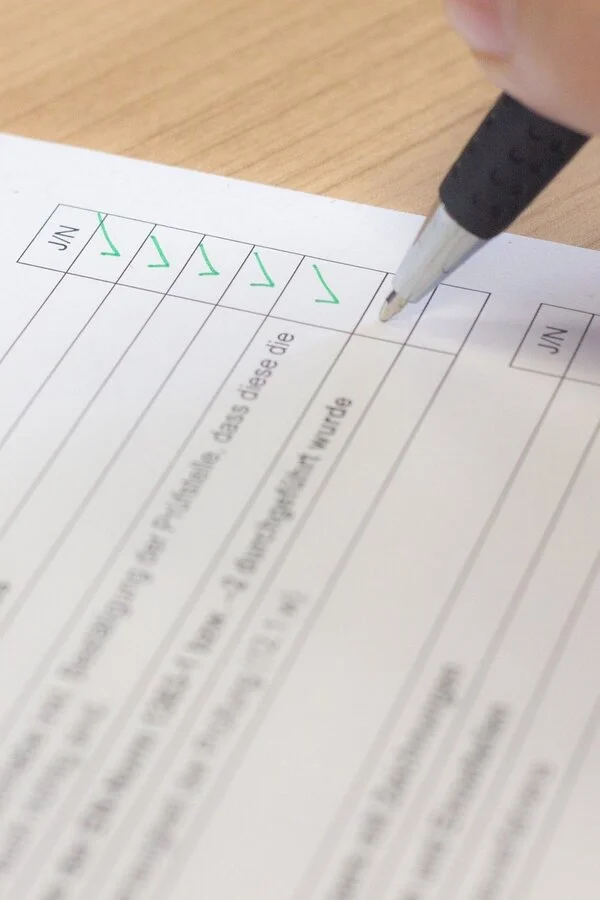
We ensure all powercords supporting documentation is present and correct to minimise delays. As a bare minimum this is a commercial invoice including: sender and receiver addresses and tax reference numbers; and the parts supplied with quantities, prices, weights, countries of origin, and HS codes. This usually serves as a customs declaration.
14. Certificate of Origin
A certificate of origin (CO, CoO, C/O) serves to prove that goods have fulfilled the requirements to be listed as originating in a particular country. It is issued independently by an official body, usually the local chamber of commerce, or customs.
A Declaration of Origin (DO, DoO, D/O) is the same, but issued by the manufacturer or exporter. They are often required as part of the import process to verify that goods really originate in the listed country and the correct duties, tariffs, and import procedures are applied.
The country of origin may be different from the country of export, and may change again if the powercords are substantially altered in another country. Rules of origin can be preferential or non-preferential.
A preferential certificate of origin will include the name of the free-trade agreement which applies to its powercords, e.g. duty-free intra-EU trade, which simplifies international trade.
The certificate or origin can also be used in high-value country-specific products, e.g. Swiss watches.
15. Approvals certificates
The customs authorities of the importing country may require the approval certificates for the powercords, as evidence they meet the required national standard, and can therefore legally enter the country to be placed on the market. This is a potential source of substantial delays, so we hold all approval certificates on file, and can supply these digitally or as a hard copy with the goods.
Conclusion
This guide, 15 expert tips for exporting powercords, provides an overview of the various issues surrounding export or importing mains cables, with pointers how to simplify the process.
Read more articles
Head Office
Morvan Trading Ltd,
Westover Farm,
Goodworth Clatford,
Andover, Hampshire,
SP11 7LF